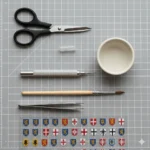
Troubleshooting Common Waterslide Transfer Problems
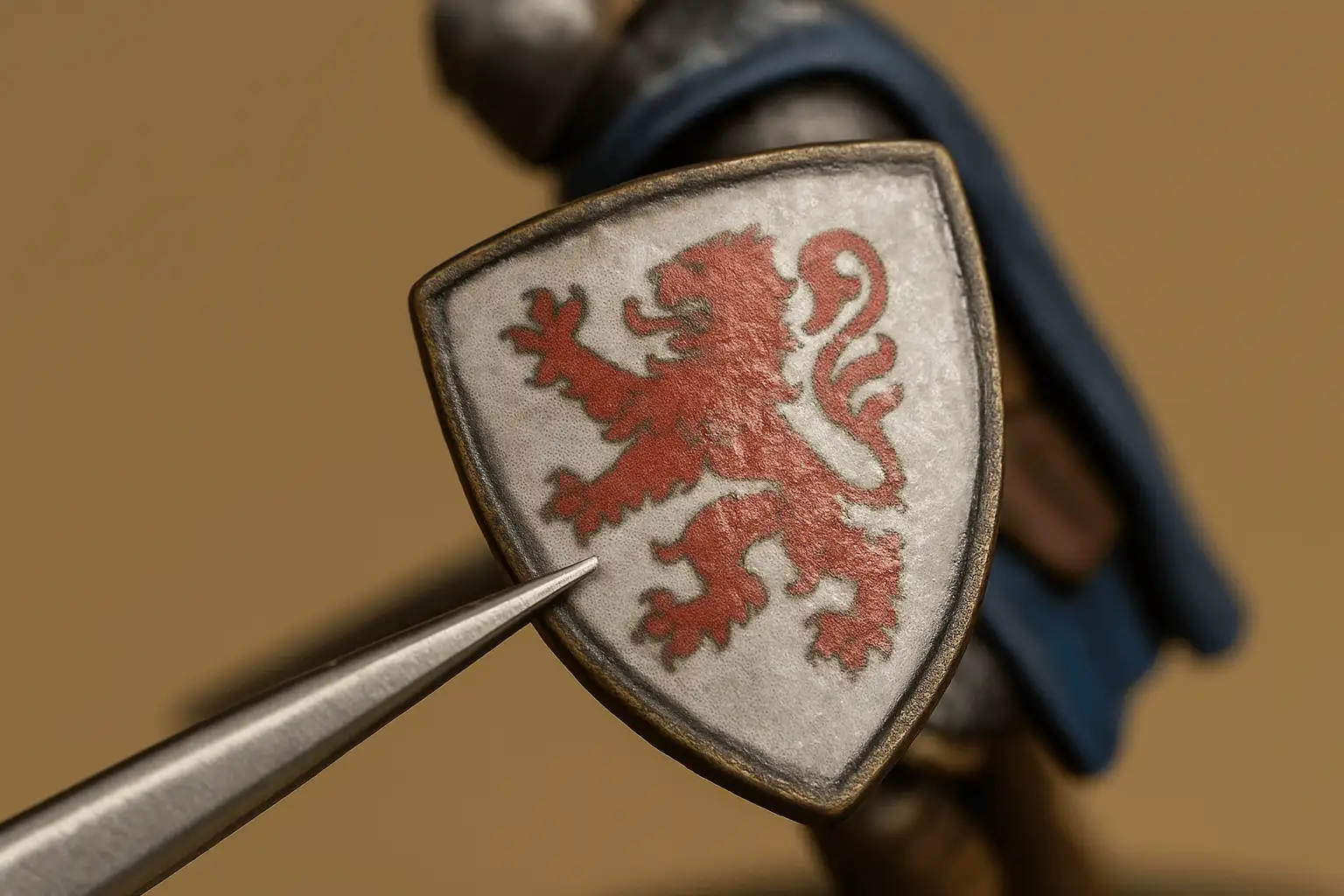
Even with careful preparation, applying waterslide transfers can sometimes lead to frustrating results. Silvering, tearing, or poor adhesion can take the joy out of the hobby if you don’t know how to fix them. This guide highlights the most common issues modelers encounter when working with heraldic waterslide transfers — and how to solve them effectively.
Problem 1: Silvering (Air Bubbles Under the Transfer)
What it looks like:
A cloudy or frosted effect where the transfer doesn’t fully bond with the surface.
Why it happens:
Air gets trapped between the transfer film and the miniature, usually on matte or rough surfaces.
How to fix it:
- Always apply transfers to a glossy varnished surface — the smoother, the better.
- Use a decal setting solution (like Micro Set) before placing the transfer.
- After applying, gently press with a damp cotton swab to push out trapped air.
- Seal with a gloss varnish, then finish with matte if desired.

Problem 2: Tearing During Application
What it looks like:
The heraldic design rips or folds when sliding it off the backing paper.
Why it happens:
The transfer is handled too roughly or left in water too long.
How to fix it:
- Soak only 10–20 seconds, then slide gently with tweezers or a brush.
- Keep the backing paper wet until the transfer is positioned.
- If a small tear occurs, carefully realign the pieces with a fine brush before sealing.

Problem 3: Poor Adhesion
What it looks like:
The transfer slides easily but doesn’t stick properly to the shield or banner.
Why it happens:
The surface is too dry or hasn’t been prepared.
How to fix it:
- Brush a thin layer of decal solution or water on the surface before applying.
- Gently press with a damp cloth or brush to improve contact.
- Seal immediately with a thin coat of varnish to lock it in place.

Problem 4: Wrinkling on Curved Surfaces
What it looks like:
The transfer creases when applied to rounded shields or banners.
Why it happens:
The flat film struggles to conform to complex shapes.
How to fix it:
- Use a decal softening solution (like Micro Sol) after placement.
- Let the solution do the work — the film will soften and stretch.
- Avoid touching until completely dry, then seal with varnish.

Problem 5: Colors Fading After Sealing
What it looks like:
The heraldic design looks dull or faded once varnish is applied.
Why it happens:
Heavy coats of matte varnish can mute colors.
How to fix it:
- Seal transfers first with gloss varnish for protection.
- Apply matte varnish lightly, in thin layers, to reduce shine without washing out colors.
- Test varnish on a spare transfer before using it on a finished model.

Final Thoughts
Waterslide transfers are one of the most effective ways to add historical detail and vibrant heraldry to your miniatures. With the right preparation and troubleshooting techniques, you can avoid common mistakes and achieve professional-looking results every time.